Still thinking about…: A Roundup

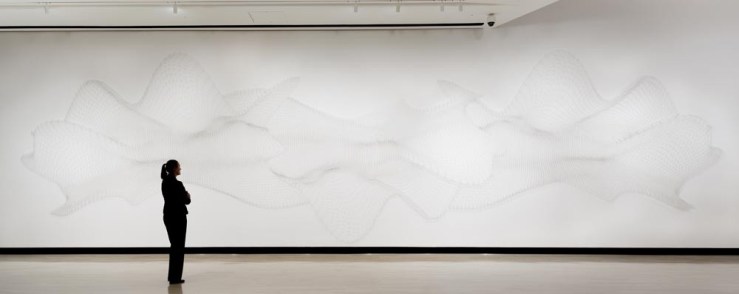
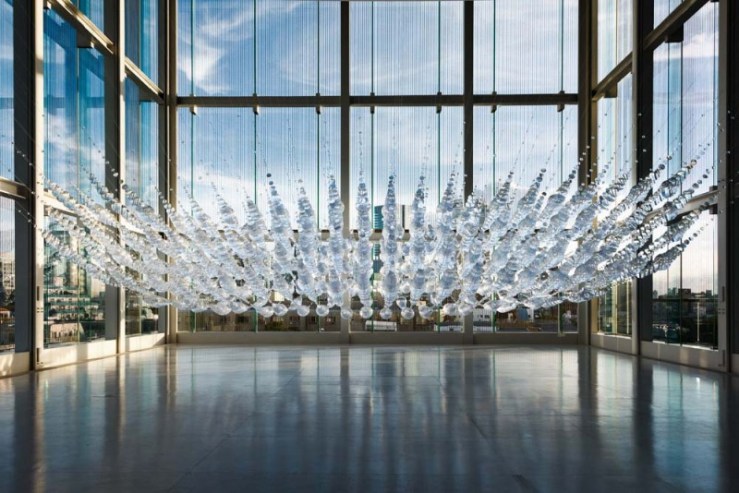
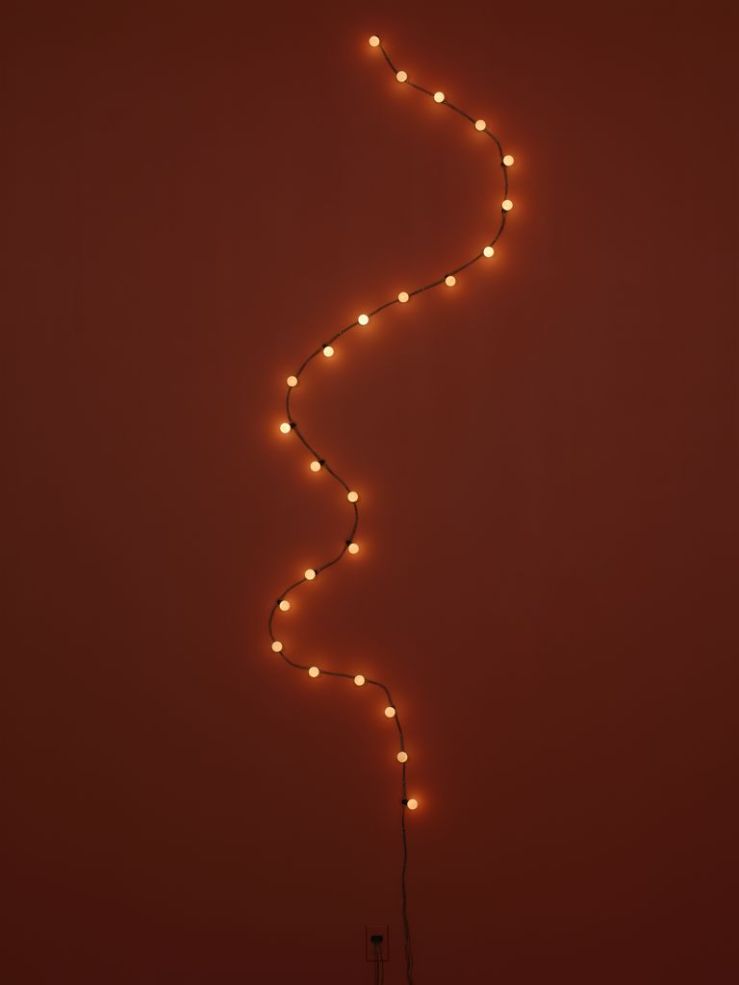
Alyson Shotz‘s sublimely beautiful, scientifically informed installations.

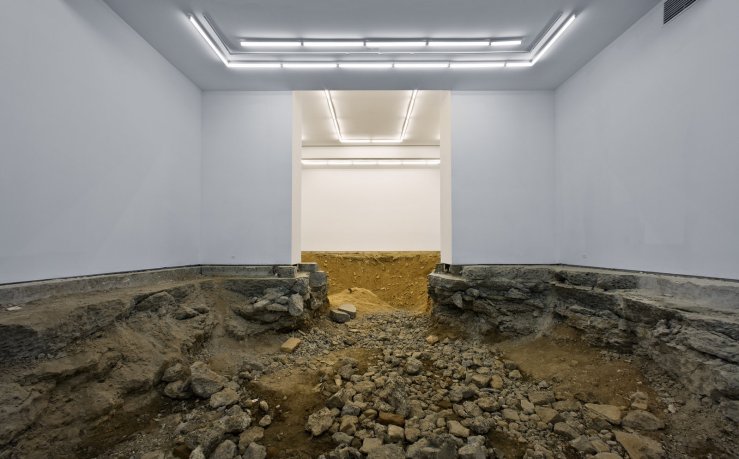
Alyson Shotz, White Wave, 2013. Edythe and Eli Broad Museum, East Lansing, MI. Robert Hensleigh.
Alyson Shotz, White Wave, 2013. Edythe and Eli Broad Museum, East Lansing, MI. Photo by Robert Hensleigh.
Alyson Shotz, Geometry of Light (2011). Photo by Jeremie Souteyrat.

Theaster Gates‘s visually and aurally stunning video Billy Sings Amazing Grace.

https://www.youtube.com/watch?v=kAaLXBUXEcA&feature=youtu.be

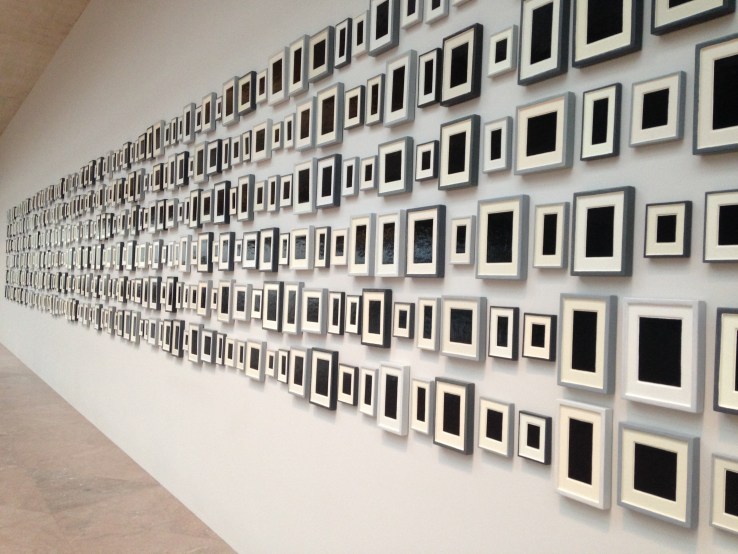
Jehan Georges Vibert’s challenge to 19th century photography in black and white oil paint.

Jehan Georges Vibert, Apotheosis of Louis-Adolphe Thiers, c. 1878.  Harvard Art Museums/Fogg Museum, Gift of Benjamin S. Bell.
Jehan Georges Vibert, Apotheosis of Louis-Adolphe Thiers, c. 1878. Harvard Art Museums/Fogg Museum, Gift of Benjamin S. Bell.

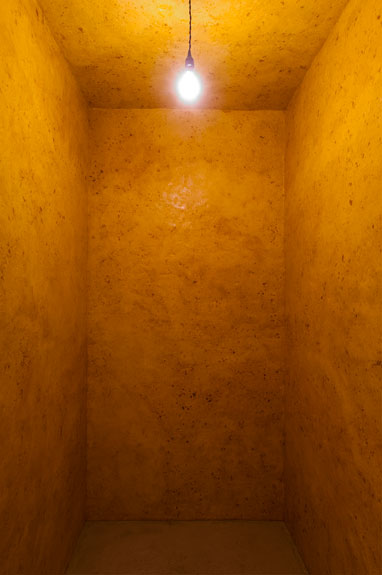
Wolfgang Laib’s cozy wax room at the Phillips Collection.

Wolfgang Laib, Wax Room. (Wohin bist Du gegangen-wohin gehst Du?/Where have you gone-where are you going?), 2013. The Phillips Collection, Washington, D.C. Photo by Lee Stalsworth.

Fallen Fruit‘s tasty wallpaper and even tastier public engagement project at the Skirball.

Anish Kapoor‘s black (blue) hole.

Anish Kapoor, At the Hub of Things, 1987. Hirshhorn Museum and Sculpture Garden, Smithsonian Institution, Washington, DC, Gift of the Marion L. Ring Estate, by Exchange, 1989.
Anish Kapoor, At the Hub of Things, 1987.
Hirshhorn Museum and Sculpture Garden, Smithsonian Institution, Washington, DC, Gift of the Marion L. Ring Estate, by Exchange, 1989.

Jean-Michel Othoniel‘s giant peony-colored tangle of handblown glass beads.

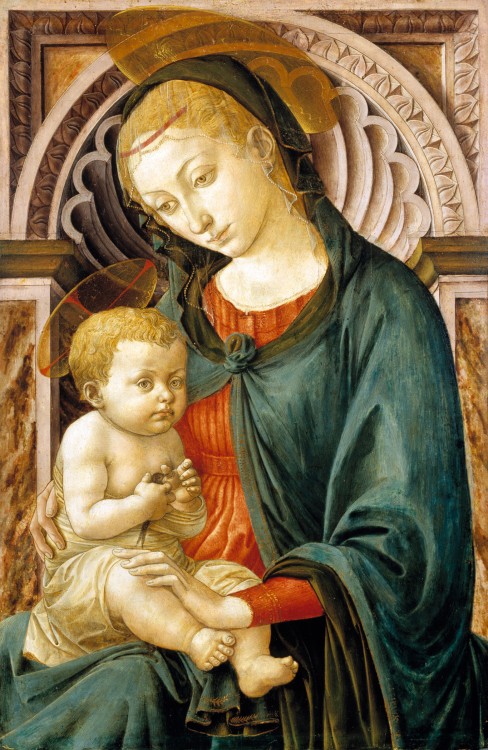
Francesco Pesellino’s intimate and tender Virgin and Child.

Francesco Pesellino, Virgin and Child with Swallow, mid-1450s. Isabella Stewart Gardner Museum.

Alice Oswald’s heartbreaking performance of her book Memorial: An Excavation of the Iliad at the Hammer last year.

Turning Audience Data into Action

Last month, I sat in on an awesome Lunch with NEMA session with John Beck, Deputy Director of ArtsBoston.

ArtsBoston is AMAZING. From their website:

ArtsBoston is a champion for Greater Boston’s arts and cultural institutions and a collaborative partner for public, private, and nonprofit leaders who seek to engage more deeply with the region’s arts and cultural sector. We gather, analyze, and disseminate data that provides a window into the significance of arts and cultural organizations to the region. We also help those organizations build their audiences and work more productively and effectively.

John gave us an overview of the amazing work his team is doing through the ArtsBoston Audience Initiative, a resource for actionable data about arts audiences in the region. Additionally, John shared The Arts Factor, an ArtsBoston initiative that uses data to demonstrate the positive impact of the arts on the Greater Boston area. Together, the Audience Initiative and The Arts Factor are powerful tools to help break down barriers to participation in the arts across the sector.

Essentially, the Audience Initiative is a community-wide database of arts participation. Subscribing organizations give ArtsBoston demographic information about their visitors (ticket buyers, members, donors, subscribers) exported from their CRM systems. ArtsBoston merges the data, cleans it up, and returns an enterprise-level view of patrons by overlaying institution-specific data with demographic information from Acxiom, a consumer information aggregator. The result is a picture of participation in the arts in Boston writ large: with over 56 participating organizations, ArtsBoston is looking at over 1.5 million unique households.

John highlighted four ways institutions can use data from the Audience Initiative to expand their base:

  • Understand existing audiences: Organizations can search arts patrons by zip code, show geographic gaps in participation, and both diversify their audience outreach and identify best prospects. There are tools to benchmark current visitor demographics against aggregated data and the census, to look at both overall and show-by-show audience composition. The most surprising finding John shared is that 76% of people in the database attend only one organization. That’s insane! As John pointed out, these single-institution-goers represent the best potential audience for any arts organization in the area, since they are already “in the door” (so to speak). Also, retention rates are very, very low (4 out of 5 ticket buyers don’t return!). John suggested that, instead of overprospecting and continuously hunting down new audiences, arts institutions would get a better return on investment by investing in retention. It comes down to this: an institution’s definition of loyalty versus a patron’s definition can vary widely. (One visit per month? Per year? Per exhibition? Multiple visits? Visits to programs and exhibitions?) We need to figure out what we want participation in our institutions to really look like, and then plan audience building and visitor retention accordingly.
  • Engage existing audiences: By seeing a holistic view of patrons across all participating arts participations, organizations can identify potential members, create personal messages, and target first-time buyers. John used the Central Square Theater here as an example of an institution that takes a strategic approach to turn first-time visitors into subscription patrons.

Here is a summary of the marketing strategy used by Nicholas Peterson & his team: They identify first-time buyers at the point of sale, and immediately invite them back after the show via direct mail and email. In the return invite, they acknowledge the patron’s participation (thank you, we know you’re new…) and incentivize a return visit with appropriate, time-sensitive offers. Evaluate, adjust, repeat. Subscriptions are up by 50% and there has been a 63% increase in multi-ticket buyers…so something must be working.

  • Find new audiences: The ArtsBoston database is a great place for prospect-finding, list trading, and cross-promotion. With cross-over analysis, institutions can look at their own visitors to identify how many they share with other area organizations. With tools to track and analyze audiences after each event and between types of programs, this is can be a powerful way to evaluate outreach and diversity initiatives.
At the end of the webinar, John turned to audience data collection techniques (you can’t invite them back if you don’t have their contact information!) Here are some SUPER USEFUL tips from John:
  • There needs to be an organizational commitment to data collection. Start at the top. Show that you act on data and use them in meaningful ways.
  • Re-imagine role of admissions and/or the box office. It is THEIR JOB to collect information from patrons. Take advantage of that small barrier to collect information at the moment someone comes in.
  • Incentivize the behavior you want (they give you information!) with strategic, well-structured rewards (discounts for sharing information, easy and FREE online registration).

I had never thought about this before, but John is so right: Why would you charge someone a service fee for booking online?! We should be offering discounts to people who book ahead! There are more opportunities to capture visitor data with online booking. It’s guaranteed admission, whether the patrons actually visit or not. It’s waaaaay easier to plan events when you have some sort of attendance estimate. Why would we disincentive online registration by throwing up barriers to access?

These data-driven insights — and more! — can be found in the PDF of John’s presentation, available here!
Good to think with

 Allan McCollum, “Surrogate Paintings” & “Plaster Surrogates”


I had the privilege of seeing Allan McCollum in conversation with art historian Miwon Kwon at the Hammer last year in conjunction with the exhibition Take It or Leave It: Institution, Image, IdeologyI think McCollum’s work is just so generous, so human, so democratic, so unpretentious. He doesn’t fetishize his objects. He works with communities and gives to them, freely. And in his conversation with Miwon Kwon, he totally resisted theorizing his own work, which was awesome.

IMG_0645
Allan McCollum. Collection of Four Hundred and Eighty Plaster Surrogates, 1982/1989. Gift of the Collectors Committee. National Gallery of Art, Washington, DC. © 2014 Allan McCollum.

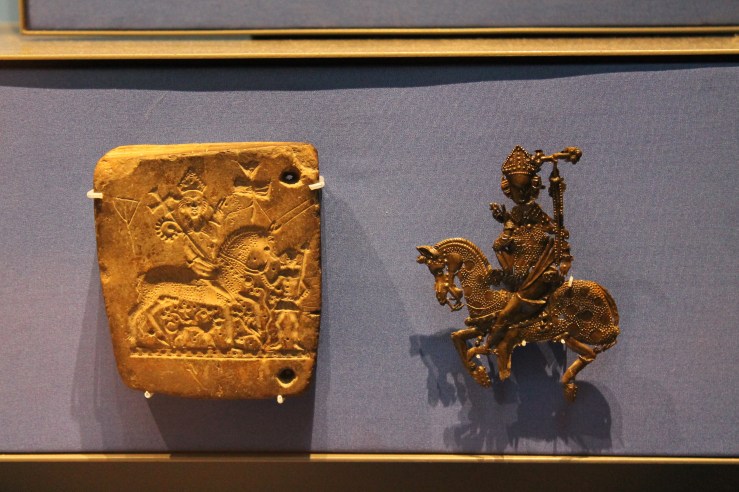
As someone who was obsessed with medieval technologies of reproduction (pilgrim badges, specifically), I laughed out loud when I first encountered his work in Take It or Leave It. 

Pilgrim badge with Thomas Becket returning from exile. Installation view with mold at the British Museum.

He has complicated my thinking about mass production and unique objects more than any other thinker or writer (pace Walter Benjamin). And he’s so nice, to boot!

IMG_0647
So excited to see ’em again at the National Gallery! December, 2014.

From the archive

I used to blog about museum work on my academic website. Since that page has gone away, I am using this space to repost some of my favorite bits. These posts were written in 2012-13.

London in Brief | Originally posted March, 2013

So the HAM flew all five graduate student task force members and our two fearless leaders to London for the week to conduct peer institution research. Phew! I’m still processing what I learned (and still trying to stay up past 10pm), but here is what I learned so far:

  • We learn when we relax. Play is deadly serious. Museums are people’s leisure activity. Therefore, the museum experience should be social and fun.
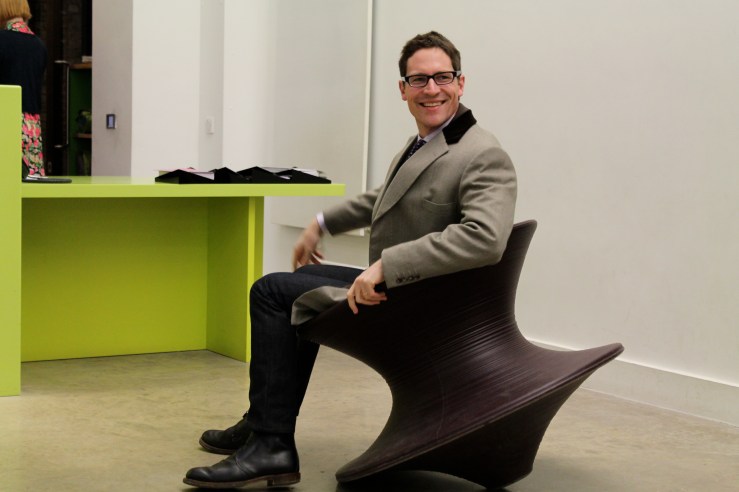
Ethan Lasser, Margaret S. Winthrop Associate Curator of American Art at the Harvard Art Museums, enjoying Heatherwick Studio's Spun Chair at the V&A
Ethan Lasser, Margaret S. Winthrop Associate Curator of American Art at the Harvard Art Museums, enjoying Heatherwick Studio’s Spun Chair at the V&A
  • Learning is a conversation, a dialogical way of understanding. When we want to understand each other or a work of art, we must speak, ask questions, and listen actively.
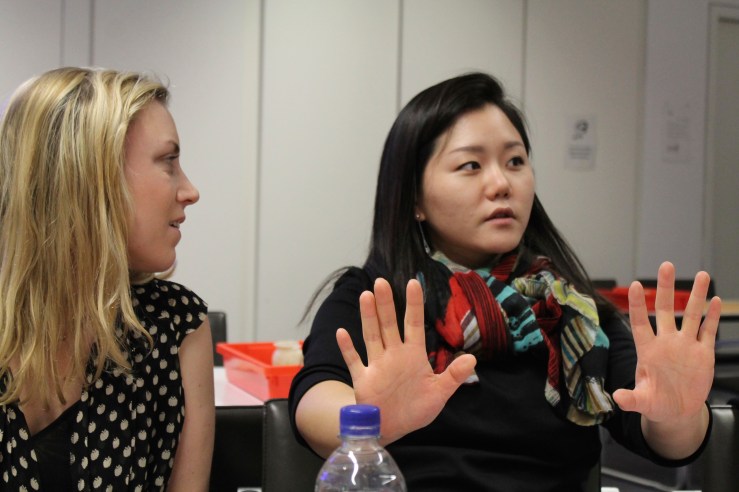
Art History graduate student Sarah Grandin actively listening to Art in Education grad Ju-Hye Ahn "push back" at the British Museum
Art History graduate student Sarah Grandin actively listening to Art in Education grad Ju-Hye Ahn “push back” at the British Museum
  • Learning is lifelong and lifewide.
  • Learning is a change in behavior or attitude as the result of reflection on experience.
  • Museums are not neutral spaces. They communicate values, so museums must communicate with intention.
IMG_1684
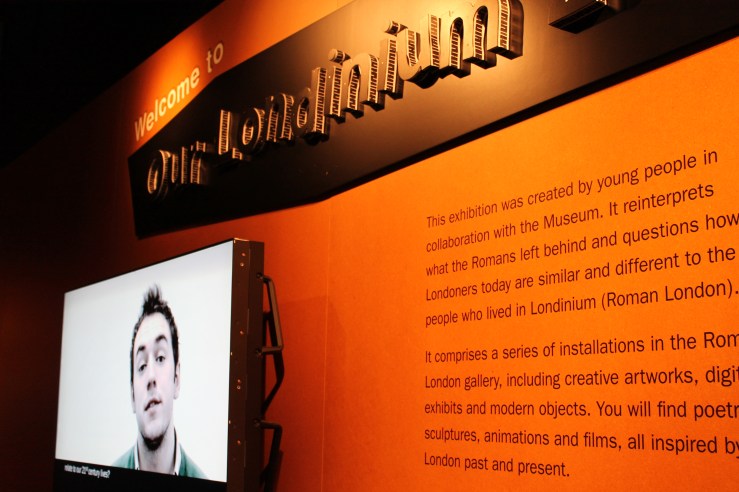
“Our Londinium” at the Museum of London, a redesign of the Roman Galleries co-curated by young Londoners (2012)
  • Reciprocity between the institution and the community is a process.
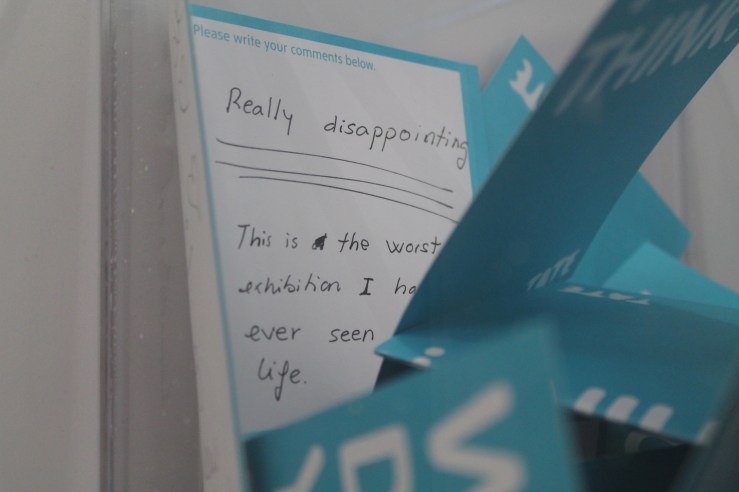
Brutally honest visitor feedback at the Tate Modern
  • Ethics are expensive.
  • You don’t want kids to feel like they can flunk the museum. The most important thing is to make kids feel like adults are listening.
  • To have an impact on schools and communities, work with teachers.
  • The goal of museum education should be to make museum educators obsolete.

What can I say? London kicked our butts.

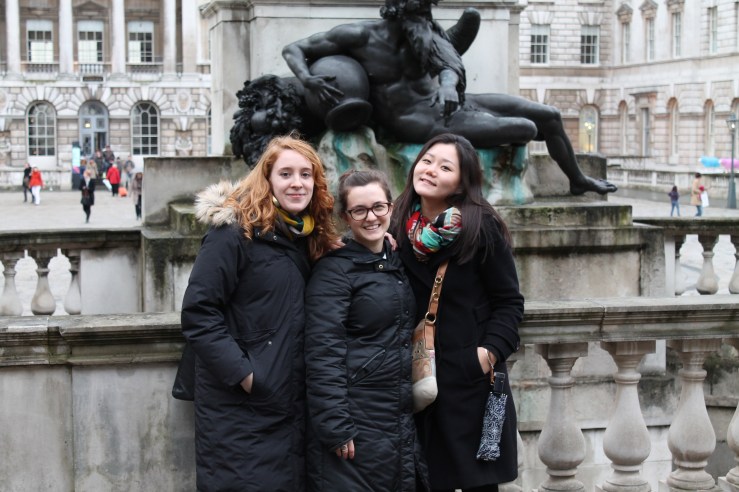
"HAM-ing" it up at Somerset House
Ju-Hye, HGSE grad Caitlin Gianniny, and I “HAM”-ing it up at Somerset House

Looking back on this post, I can understand now how formative that trip was for me. Recently, I saw Corinne Zimmerman at the Gardner Museum; she reminded me how jazzed I was after our visit to the University of Leicester (where I am now studying for my MA in Visitor and Learning Studies). She told me that, while waiting for the train, I kept shouting — “I feel like a radical!”

At sea in project management land

On February 19th, I sat in on Part II of a project management webinar series hosted by the American Alliance of Museums and produced by the Coalition to Advance Learning in Archives, Libraries and Museums [which is supported by the Gates Foundation and OCLC (“The world’s libraries. Connected.”)] featuring folks from the Institute of Museum and Library Services.

For those keeping count at home, that’s five national museum- & library-related institutions for one webinar series.

Since I missed Part I, I was rather at sea for the whole thing. Fortunately, Mary Ellen Davis from the Association of College & Research Libraries (six!) took notes in the comment section of the webinar interface to help n00bz like me keep track of the big take-aways. And so, I present to you:

Mary Ellen Davis’s Summary of Project Management 101: Evaluating Your Project Plan

  • Be specific with tasks
  • Look for partners
  • Suggestion: distinguish audiences by use-value of collection
  • Size of audience is not necessarily relevant to size of funding
  • Digitization can benefit from outsourcing or partnering to avoid big investment in overhead, software, and hardware
  • Having right partners can lower cost and increase your audience for our work
  • Make sure project overview matches audiences
  • Funders look for projects with specific outcomes
  • Be clear on who the primary audience for your project is and focus on framework for collaboration
  • When collaborating, there is an advantage to starting small and learning about each other and building trust and support
  • If material is digitized and posted without clear permissions, make sure you have a take-down notice with it to protect yourself and the institution
  • Threat of litigation is lower than we think
  • Project management is not just outward-facing – you can project-plan to meet the needs of the organization

So, um, not terribly enlightening in summary form. I guess you had to be there…(or here, if you’re itching to experience it yourself.)

The above is not radically changing my approach to project management right now. But it wasn’t time wasted — here are two things I’m filing away for myself:

Peer2Peer – Early Childhood Education in Museums

Yesterday, I sat in on another fantastic Google Hangout with the National Art Education Association’s Museum Division. The Peer2Peer Initiative, launched in 2011, connects museum colleagues across the country (and the world? I’m looking at you, Uni of Leicester…) to share ideas and reflect together.

John Singer Sargent. The Daughters of Edward Darley Boit, 1882. Museum of Fine Arts, Boston. Gift of Mary Louisa Boit, Julia Overing Boit, Jane Hubbard Boit, and Florence D. Boit in memory of their father, Edward Darley Boit.

Yesterday’s session was about Early Childhood Education in Museums, hosted by museum educators and teachers. A lot of the folks on the panel work with or have worked for the Smithsonian Early Enrichment Center. (How badly do you want to be a preschooler there?!)

The big framing questions for the hangout were: How do young children learn? What are the benefits of teaching with and through visual arts? So here are some my takeaways from the conversation:

  • Kids learn by making connections between prior knowledge and new experiences. Therefore, museum educators should actively support personal meaning-making by connecting what is happening in the museum to kids’ relationships, prior experiences, etc.

(Side note: This definition of learning has been hammered into my head so many times. Thanks, MLA! “Learning is a process of active engagement with experience. It is what people do when they want to make sense of the world.”)

  • Technology should be used in a way that is developmentally appropriate. Technology should not replace real objects, but rather should compliment and support sensory engagement. Be open to caregivers using their smartphones.  A lack of comfort with museum content is a barrier to access, and phones provide access to information.

(OK, but can we — should we — steer caregivers away from information and toward experiences? Or at least provide models for ways to use information productively?)

  • Speaking of barriers to access: it is a difficult task for caregivers to select which works are appropriate for kids.  Museums should do the work to identify objects and spaces that are appropriate for young learners, and should provide strategies and models for engaging with those objects.
  • Teaching with visual art objects can serve broad needs and learning styles. Kids are accomplished visual learners before they can read or speak. With picture books, kids tell stories and “read” through line, shape, and color. As with picture books, sharing art images can improve recognition, perception, and observation skills.
  • Speaking of modeling strategies (and this was my favorite takeaway): Think of museum objects like wordless picture books.  Use basic storytelling strategies like inference and predicting.

(I think this framing device for thinking about museum objects is so powerful, and I can’t wait to try it.)

  • Early childhood education encompasses the full family, along with schools, community centers, and all those who are caring for, supporting, and interacting with young children. When thinking about early childhood programs, museums must extend learning opportunities to all audiences (including students, teachers, and young adults). We can therefore think about professional development under the umbrella of early childhood education.

(This totally jives with the great work that Daryl Fisher of the Crocker Museum et al did with their IMLS-funded project: “Best Practices in Cultivating Family Audiences.” This is my favorite. resource. ever. I went to a panel about this project at NAEA last year, and I have returned again and again to those notes.)

  •  It is possible to have have content-rich experiences with small amounts of contact time.
  • Frontline staff are the critical element to positive family experiences. Make sure everyone on staff knows that this audience is welcome, and empower staff to help young learners engage with the museum in a way that is safe for the collections and for other visitors. Include the whole staff in professional development related to childhood development. Teach everyone how kids learn, and give them tools to understand what they can expect from children and what kinds of support caregivers are looking for from an institution.

I was really impressed with Melissa Covington from the Art Institute of Chicago. I love it when museum ed folk back up their practice with research, and Melissa knows the field like whoa. It’s even better when smart practitioners conduct and disseminate their own research. The Art Institute convened an Early Childhood Learning Community, which met regularly at the museum to discuss the needs and goals of caregivers. Melissa and her team collected data to identify common themes between the learning community and the museum, including:

  • Thinking of the museum as a resource: for teachers as learners themselves, for early learners, and for school visits
  • Identifying best practices in early childhood education
  • Providing museum resources to support formal learning
  • Addressing standards and pedagogies associated with arts learning

I am very curious to understand how parenting styles impact early childhood experiences in museums. I think a lot about learning styles and different points of entry and levels of engagement and sensory experiences…for learners. I haven’t really thought a lot about the impact that different approaches to parenting might have on those learners’ experiences. I wonder if Gen X/Y parents are changing the landscape of early childhood programs in any way, as parents can be expected to be more technologically savvy (maybe), or are bringing their own smartphones (maybe), or grew up with Sesame Street, or whatever characterizes Gen X/Y parents. (Apparently, the Sesame Workshop has fabulous resources for early childhood education.)

Thanks, NAEA Museum Division for giving me a lot of stuff to think about!

Watch the full hangout here!

A list of resources mentioned in the hangout available here, including:

From the archive

I used to blog about museum work on my academic website. Since that page has gone away, I am using this space to repost some of my favorite bits. These posts were written in 2012-13.

**UPDATE: I just found out that Ju-Hye will be presenting our paper at the 2015 annual conference of the Canadian Society for the Study of Education. If you are planning to be in Ottawa in June, check it out! Yay, Ju-Hye!**

How do different learning experiences alter visitors’ perceptions of what belongs in a museum? | Originally posted February, 2013

This paper, co-authored with Ju-Hye Ahn, was written for Shari Tishman‘s “Active Learning in Museums” course in January 2013. Ju-Hye and I conducted a study at the Sackler Museum to investigate the impact of active learning experiences on visitors’ perception of what belongs in a museum. By offering two different types of structured learning experiences (one information-based, one inquiry-based), this study sought to understand how active engagement advances a visitor’s understanding of an artwork and enhances her aesthetic perception.

Furthermore, we obliquely studied the the museum as a site of knowledge-production, and asked viewers to interrogate curatorial choices. By evaluating whether Felix Gonzalez-Torres’s Untitled belongs in a museum, visitors reflected on the purpose of museums themselves.

Click here to read the full paper.

Felix Gonzalez-Torres. "Untitled" (Last Light), 1993. Harvard Art Museums/Fogg Museum, Gift of Mr. and Mrs. John Cowles, by exchange. © The Felix Gonzalez-Torres Foundation
Felix Gonzalez-Torres. “Untitled” (Last Light), 1993. Harvard Art Museums/Fogg Museum, Gift of Mr. and Mrs. John Cowles, by exchange. © The Felix Gonzalez-Torres Foundation

Good to think with

What this exercise shows students is that just because you have looked at something doesn’t mean that you have seen it. Just because something is available instantly to vision does not mean that it is available instantly to consciousness. Or, in slightly more general terms: access is not synonymous with learning. What turns access into learning is time and strategic patience.

Jennifer Roberts, Harvard Initiative for Learning and Teaching Conference (2013)


Also:

Good to think with

Seeing for oneself, which imagination and reverie encourage, is not merely convenient (there isn’t always a helpful guide to hand). Seeing something for oneself helps to make the experience matter personally. From an austerely rational point of view, the difference in genesis (seeing for yourself or having something pointed out by another) ought not to make any difference. After all don’t  you end up with the same perception? But we know perfectly well that in many areas of existence personal discoveries have a savour and intimacy which is rarely matched by what we learn from others. Even though we need others to point out some things, it is a loss if they don’t leave room for our own discoveries. The value of personal discovery lies in the fact that not only do we arrive at a helpful conclusion, but that we have experience of how the conclusion was reached. We gain acquaintance with the process of coming to see. (page 78)

John Armstrong, Move Closer: An Intimate Philosophy of Art